
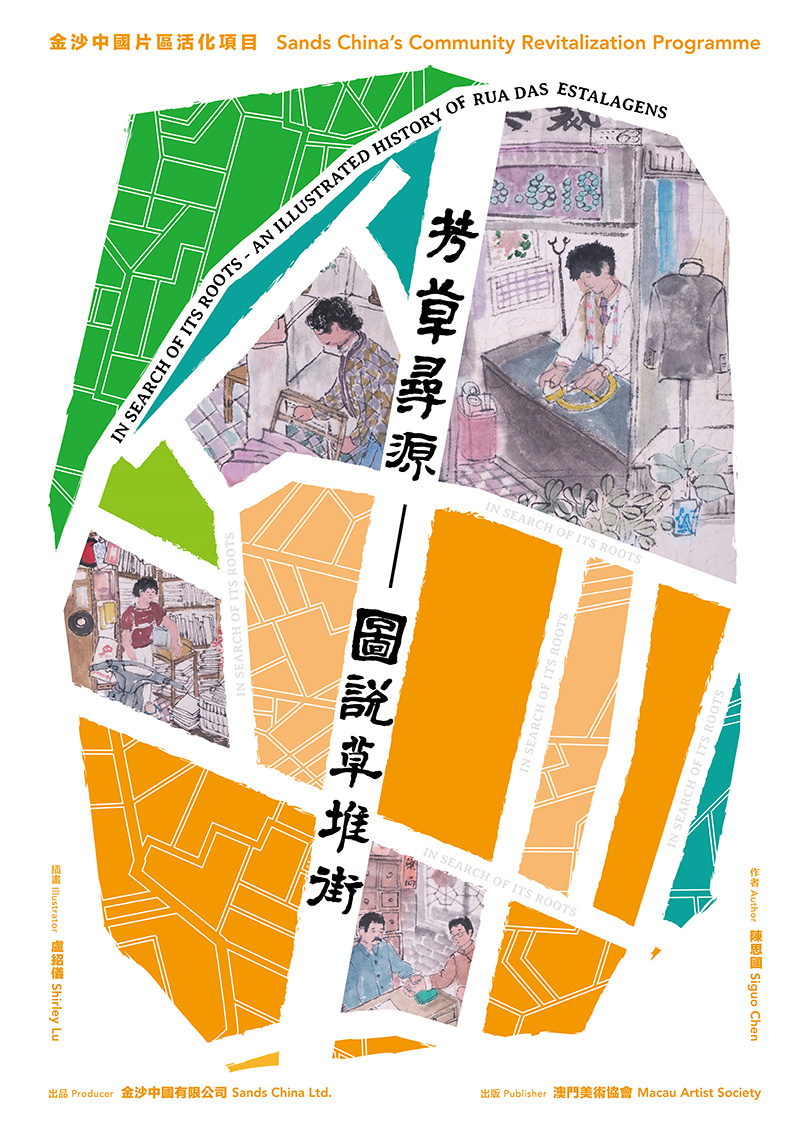
In addition to having been a commercial centre where all kinds of businesses converged, the former Rua das Estalagens contains many other facets of profound historical and cultural value. In order to more effectively pass on the precious stories of Macao’s old street and bring the street back to the public’s awareness, Sands China has joined hands with the Macau Artist Society to tell the history of the street via the publication “In Search of Its Roots – An Illustrated History of Rua das Estalagens,” using narratives, images, illustrations and legendary stories collected through the community’s joint effort. This book allows local and overseas readers to understand the past and present of Rua das Estalagens, and is a valuable resource for schools and communities.
Producer: Sands China Ltd.
Publisher and copyright: Macau Artist Society
Author: Siguo Chen
Illustrator: Shirley Lu
Published December 2024

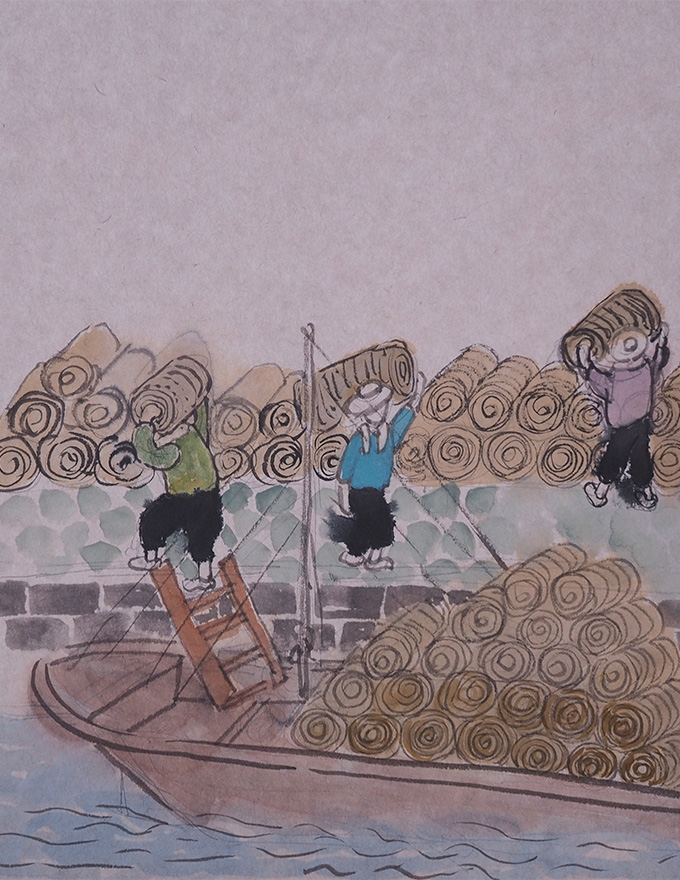
In the 16th century during the Ming dynasty, Portuguese traders arrived in China via maritime routes and temporarily resided in the city. At that time, Rua das Estalagens (whose Chinese name means “Haystack Street”) wasn’t even a street, but a tidal flat where boats loaded and unloaded goods, and firewood was stacked. Two hundred years later during the Qing dynasty, merchants began opening shops there by building shacks to do business and live in, forming what became known as Rua das Estalagens.

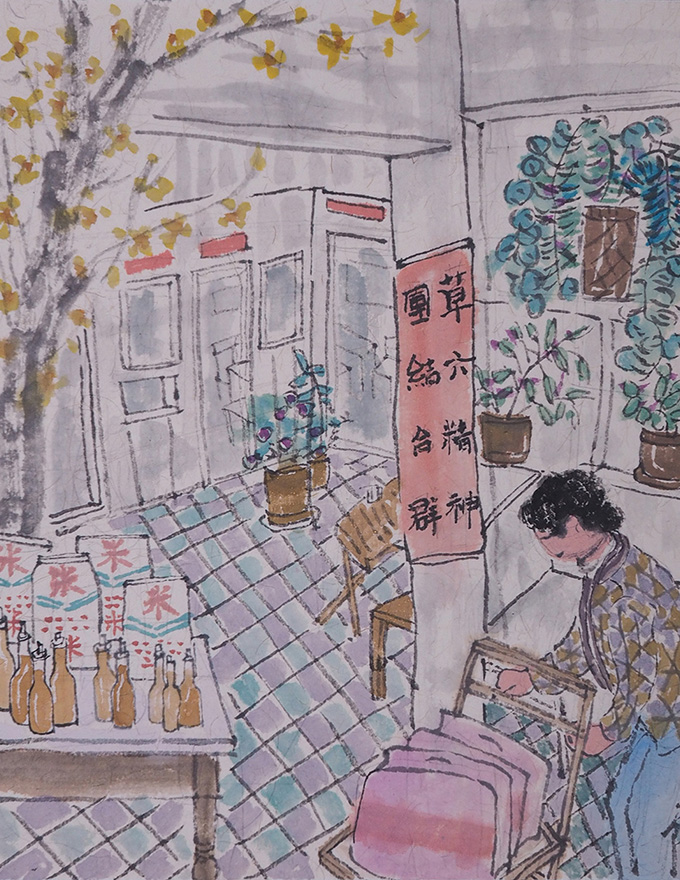
In its early years, Macao was both shared and divided between the Chinese and Western populations. Language barriers and cultural differences made it difficult for the Portuguese government to effectively govern the Chinese population.
Consequently, various social bodies began to play an important role in mediating disputes and providing aid within the Chinese community. The Chou Toi Six-Neighbourhood Association was established in September 1967. Its mission was to foster a sense of local unity and support the community.
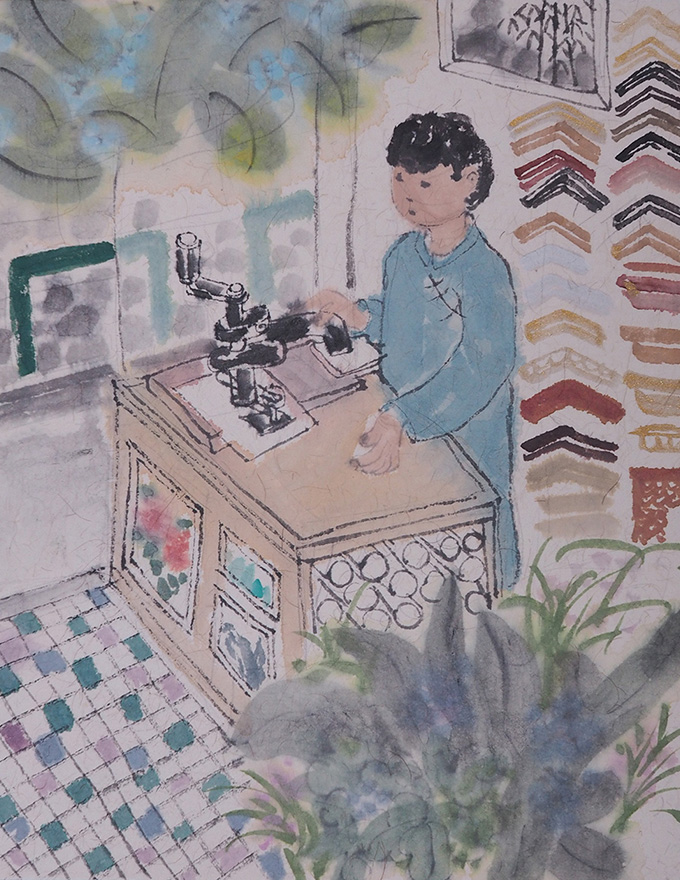
Glass is everywhere in our daily lives. Over the past few decades, advances in production technology have continually improved the quality of glass, making it a popular choice for decorative and architectural projects. Cheong Seng Glass has over 70 years of history on Rua das Estalagens and still stands today. Much like the mirrors that its success is built on, the enterprise itself is a reflection of its own steady growth and prosperity.
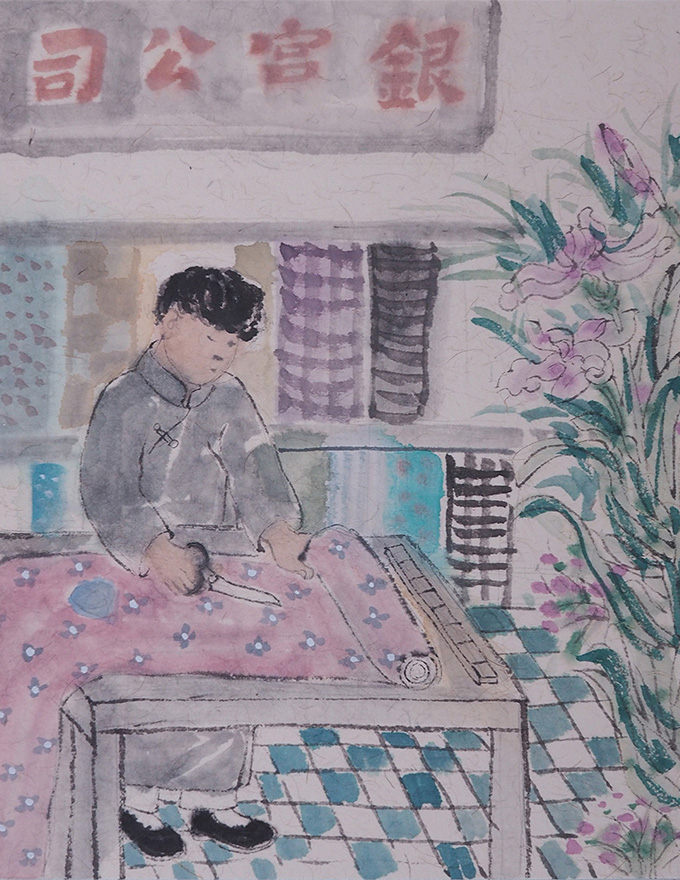
The fabric trade on Rua das Estalagens dates back over 200 years and the street has long been a centre for the textile industry. At the industry’s peak, from the 1970s to the 1990s, the street housed over 20 fabric shops. In its most prosperous days, the street teemed day and night with people coming to buy either gold or fabric. As time has gone by, only Ngan Kong Fabric Company remains as a vestige of the street’s once-thriving fabric trade.
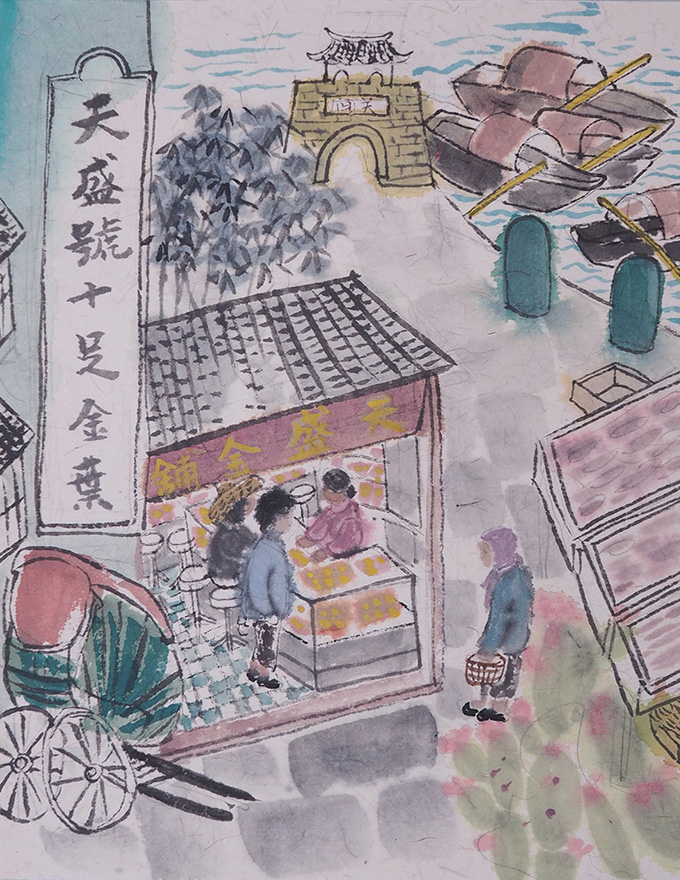
Historically, Macao’s main transportation hub was the Inner Harbour, and Rua das Estalagens served as the most direct route between the Inner Harbour and the city centre – ensuring a steady flow of people and goods, and creating abundant business opportunities. As a result, many gold shops were established on Rua das Estalagens. Today, Tin Seng Jewellery, with over 100 years history, is run by its third-generation heir and stands as the last remaining gold shop on the street.
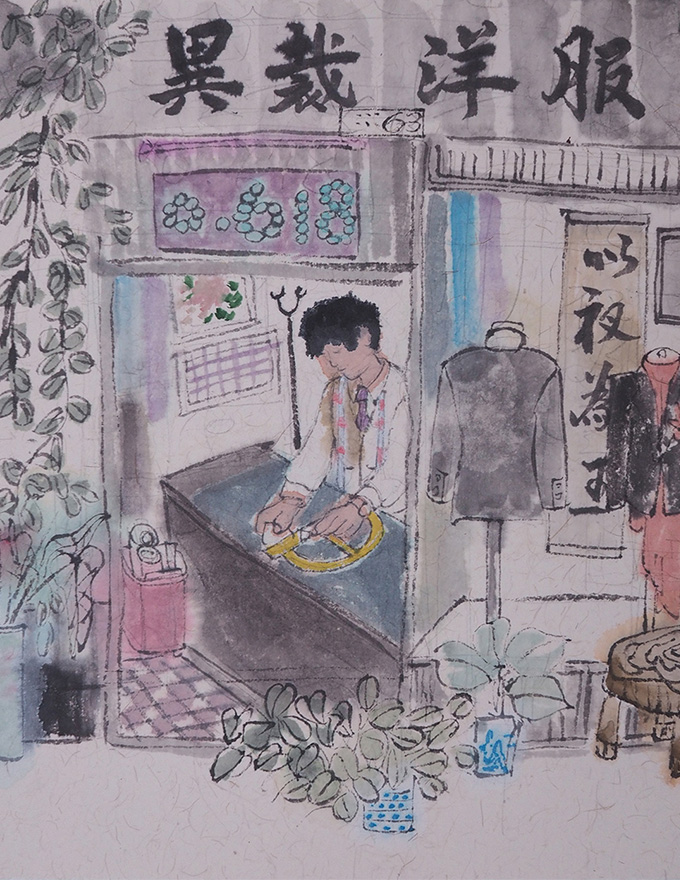
As Macao’s economy grew in the 1970s, Rua das Estalagens’ fabric industry entered its most prosperous era. Over the years, several tailor shops opened on the street, including I Choi Tailor Shop, which began serving customers in 1973. The owner even pioneered a distinctive cutting technique known as the “0618 three-dimensional measurement method,” a blend of philosophy, mathematics and years of tailoring expertise.
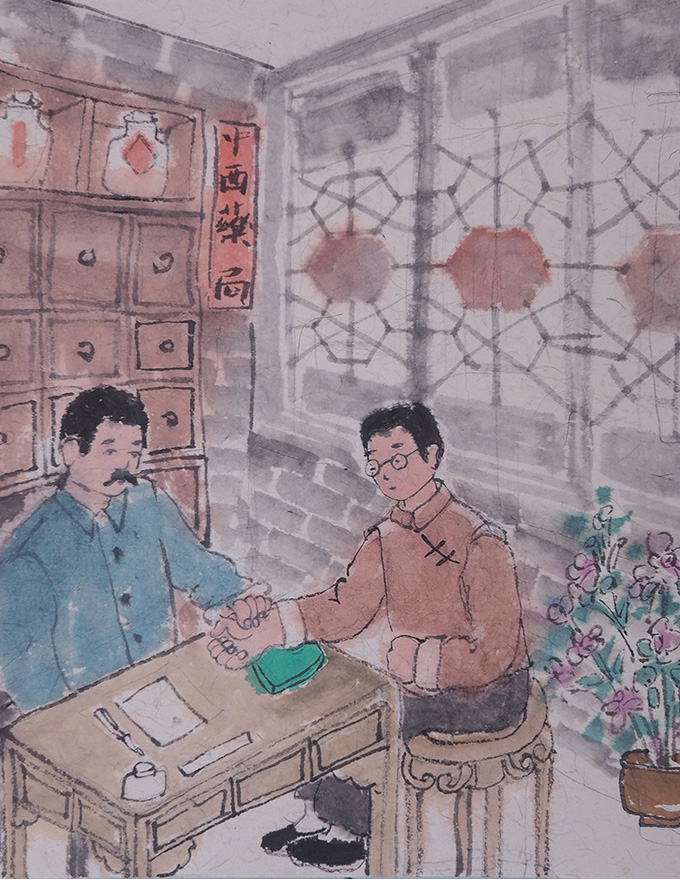
The former Chong Sai Pharmacy was founded by the revolutionary pioneer Sun Yat-sen at No. 80 Rua das Estalagens. It was one of the first pharmacies and clinics in Macao’s recorded history to have Western medical services offered by a Chinese doctor. Sun had strong ties with Macao, where he began his earliest revolutionary and socialist work.
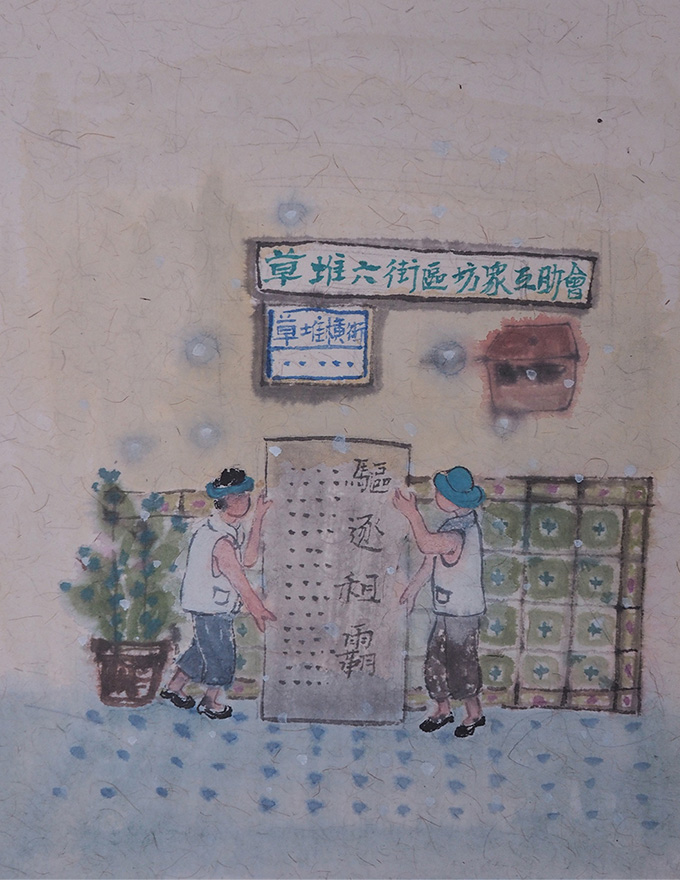
In the past, stone tablets served as lasting records of community issues or important government policies. On the outer wall of the Chou Toi Six-Neighbourhood Association building, there is a small, preserved stone tablet dating back to 1873. This relic, now 150 years old, offers a tangible link to a story of a disruptive tenant.
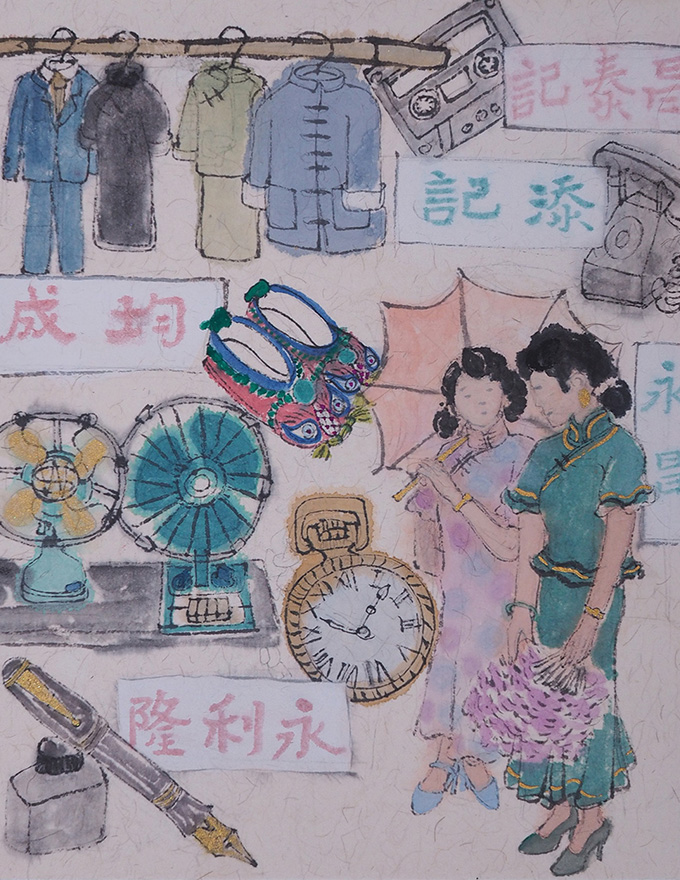
Rua das Estalagens was not only known among locals as Fabric Street and Gold Jewellery Street, but also as Second-hand Clothing Street. Pawn shops were once the main suppliers for second-hand clothing stores, providing underprivileged customers with budget shopping options, sparking a boom in Macao’s second-hand apparel market. In the 1950s and 60s, around 14 or 15 of the area’s 20-plus second-hand clothing stores were located on Rua das Estalagens.
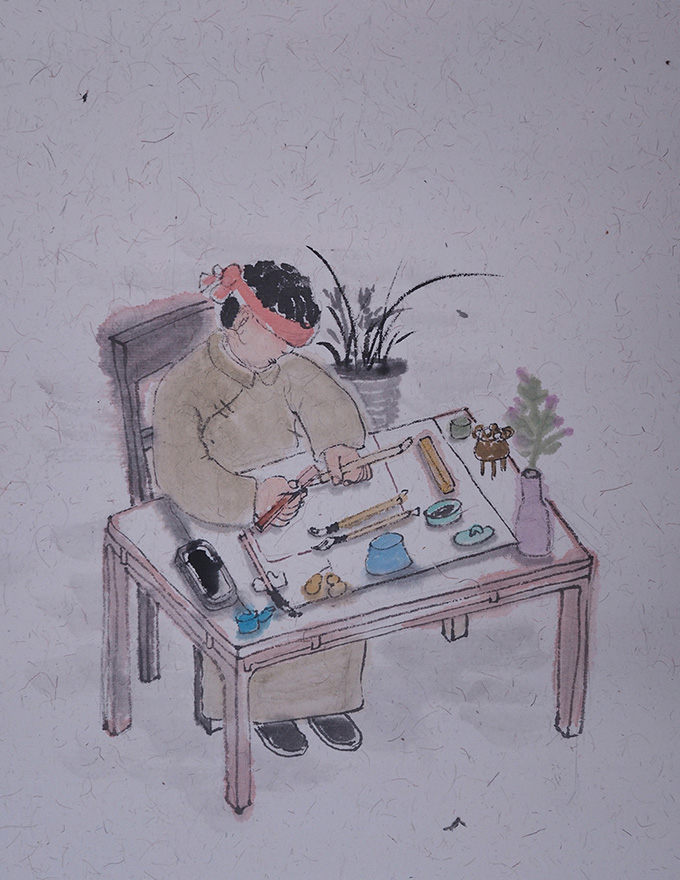
In the 1960s, once such strange man surnamed Chan, opened a small shop at No. 87 Rua das Estalagens, calling
it “Kuai Hon, A Brush Expert.” He had a peculiar talent of carving Chinese characters onto brush handles
while blindfolded.
Another strange man is a devoted book lover who has taken a journey from reading books to cherishing,
collecting, and trading them – ultimately becoming a “caretaker of books” in a second-hand bookstore that he
runs at No. 4 Rua das Estalagens. Even after all these years, he still waits hopefully for his dream
customer.