Low-Carbon Transition
Advance energy efficiency and renewable solutions to address climate change
Energy Efficiency
Design buildings that conserve electricity and deploy new technologies to reduce energy consumption during ongoing operations
Renewable Energy
Seek out renewable energy solutions, including on-site solar thermal and solar photovoltaic systems and renewable energy credits
Transportation
Transition guest shuttle buses to electric and clean-fuel sources and leverage carbon offsets for hard-to-decarbonize air and ferry travel
We have developed a comprehensive set of initiatives to reduce our climate impact in line with the United Nations Paris Agreement. We achieve our emissions-reduction goals by striving for energy efficiency, employing renewable energy and converting to low-emission vehicles.
In 2025, we reduced our scope 1 and 2 emissions by 61% from a 2018 base year, achieving both our 17.5% and 1.5°C-aligned 30% reduction targets. We achieved 100% of our current emissions reduction targets, and will be establishing new emissions reduction targets for 2030. Midway through this five-year cycle, we released our first low-carbon transition plan that outlined the new 30% emissions-reduction target, complementing the 17.5% emissions-reduction target we initially established. Creation of the pathway to achieving 30% in emissions reduction aligns with the Paris Agreement's guidance on limiting temperature increases to 1.5°C.
WASTE
Promote reduction, reuse and recycling of products and materials
Food Waste
Tackle one of our largest waste streams through prevention, rescue and diversion
Construction Waste
Responsibly handle construction waste from new developments, remodels and renovations
Operational Waste
Recycle whenever possible and find opportunities to reduce waste generation
Because we are committed to resource conservation, managing waste is a top priority. We focus on waste prevention, process management and ongoing education, especially in the areas of food service, operations and construction to address our largest waste streams.
We collaborate with other companies to make use of waste streams as inputs. In 2025, Sands China partnered with a regional company specializing in upcycling waste into innovative products, to explore circular economy solutions. Through a trial project, discarded hotel linens, towels, and uniforms once destined for disposal are being transformed into acoustic panels for ceilings and walls. This initiative demonstrates how textile recycling can be integrated into design, reducing waste while creating functional spaces. Our next step is to incorporate these panels into training rooms and future renovations. Sands China seeks to show that textiles can be repurposed into meaningful applications, giving waste and unwanted items a second life.
Starting in 2022, Sands China has progressively enhanced its recycling initiatives for used playing cards as part of its waste management program. By 2025, the Company distinguished itself as the premier resort operator in Macao to achieve 100% recycling of used playing cards. We also conducted waste audits to improve waste segregation at our properties, and worked with retailers to enhance operational practices and encourage greater participation in recycling initiatives, expanding our recycling infrastructure. Among them the below stores/brands:





















MATERIALS AND RESOURCES
Increase purchasing of sustainable products and services
Responsible Sourcing
Integrate sustainability into our properties’ total life cycles by using environmentally preferred materials, technologies, products and services
Plastic and Packaging
Replace single-use products and packaging with sustainable alternatives and transition to reuse models where possible
Our business requires thousands of products and services, and we work diligently to source environmentally friendly options, as well as to avoid or eliminate harmful materials and processes.
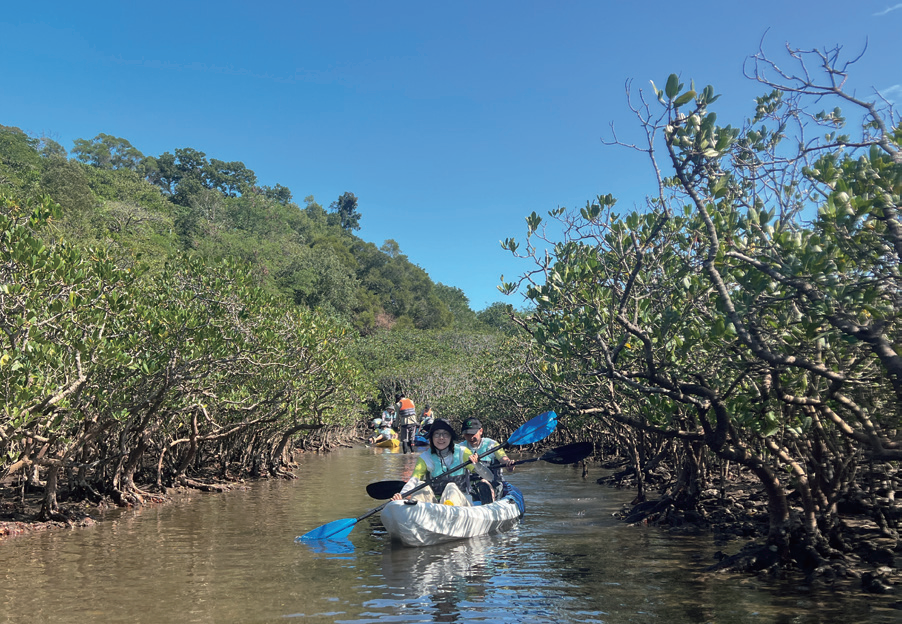
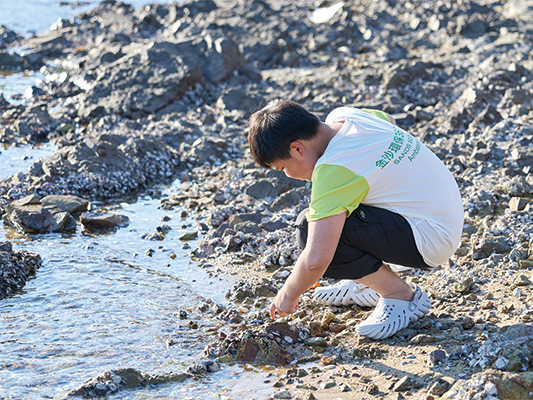
Sands China's Green Leadership Program
provides team members with hands-on
environmental experiences such as coastal
cleanups, seminars on local marine ecology,
and immersive engagements on the coast and
in the harbor. Notably in 2025, team members
embarked on a canoe trip through mangrove
swamps in Hong Kong to deepen their
understanding of ecosystem preservation and
the impact of pollution.
The Green Leadership Program provided an
opportunity to educate our team members
on specific priorities of our Planet pillar, such
as plastic reduction, by demonstrating the
impact products can have on natural habitats.
These efforts also represent our commitment
to fostering a culture of environmental
stewardship by empowering team members to
contribute directly to our sustainability goals.
WATER STEWARDSHIP
Protect, conserve and reuse water resources
water efficiency
Upgrade fixtures and systems, enact water-conservation policies and encourage sensible water usage
Water Reuse
Increase use of non-potable water for landscaping, restorooms, cooling towers and other users
ecosystems
Partner with regional water champions to reinvigorate biodiverse ecosystems, increase resiliency, engage communities and leverage water technologies
Water is a precious natural resource ― vital to our planet and integral to our business. Our conservation initiatives focuses on using water efficiently in our operations and working with our regions to improve water quality.
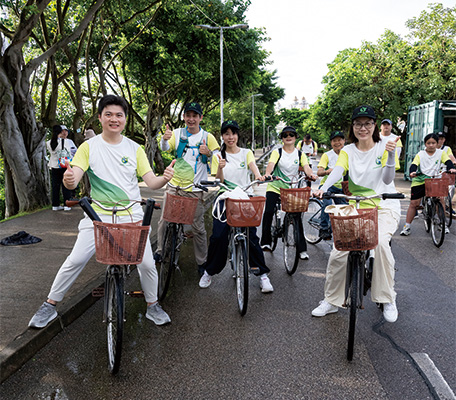
The 2025 Sands ECO360 Ambassador Green Leadership Program has curated a series of engaging events to explore marine ecology and raise awareness about protecting our ecosystems. Besides coastal cleanups, activities also included cycling along the Cotai coast, and Inner Harbour explorations. One highlight was the Microplastics Experiment, designed to address the growing concern of plastic pollution in marine environments. Although microplastics are often invisible to the naked eye, they have significant and harmful impacts on ocean ecosystems. Through hands-on sampling techniques, filtration processes, and analysis methods, participants learnt how to detect microplastics and understand their effects.

Biodiversity
Reduce deforestation, protect marine environments and preserve natural ecology
While we address biodiversity through several of our environmental initiatives, we continue to explore deeper understanding of our impact on oceans, freshwater and land so that we can evolve our efforts with a well-defined strategy and actions.
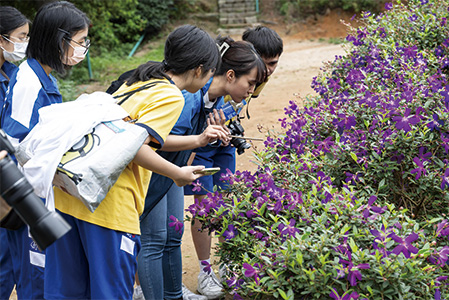
Sands China, in collaboration with the Macao Science Center, hosted the “2025 Macao Biodiversity Data Science Challenge”, held concurrently with the global “City Nature Challenge”. The competition highlighted Macao’s unique ecological landscape, emphasizing the importance of species in relation to our distinctive geographic location and humid climate conditions. Our Sustainability team proactively reached out to the Macao Science Center and mobilized the Macau local schools and students as many as possible to participate in the event. They also engaged local community members and ECO360 Ambassadors to collect the highest possible number of observations. Participants submitted over 64,000 observation records covering 4,100 species, contributing to a globally recognized dataset.